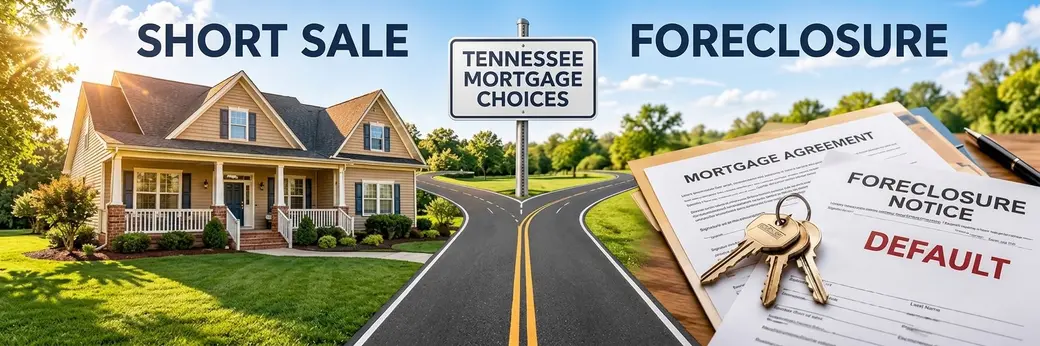
Short Sale vs. Foreclosure in Tennessee: What's the Difference?
If you've fallen behind on your mortgage in Tennessee, understanding how a short sale compares to a foreclosure can help you make more informed decisions about your home and financial future.

Usa el selector de idioma en la parte superior para traducir la página al instante, o comunícate con nuestro equipo para consultar opciones de asesoría bilingüe.

If you've fallen behind on your mortgage in Tennessee, the words short sale and foreclosure may sound similar, but they describe two different processes. The difference matters because each option involves different steps, lender requirements, financial consequences, and levels of control over what happens to your property.
Let's break down what each term means, how the processes compare, and what you should understand before making a decision.
What Is a Short Sale?
A short sale happens when you sell your home for less than the remaining balance on your mortgage, and your lender agrees to accept the sale proceeds as part of an approved resolution.
You remain involved in the sale of the property. You can work with a real estate professional, review offers, and negotiate with potential buyers. However, the lender or mortgage servicer must approve the transaction before it can move forward. Other lienholders may also need to provide approval.
A short sale can be an alternative to foreclosure when keeping the home is no longer financially realistic. You can also explore selling your home in Tennessee to learn more about the real estate side of the process.
Learn more from the Consumer Financial Protection Bureau.
What Is a Foreclosure?
Foreclosure is the process a lender may use to enforce its rights against a property after the borrower defaults on the mortgage. Depending on the circumstances, the property may be sold through a foreclosure sale to recover some or all of the outstanding debt.
In Tennessee, many foreclosures follow a nonjudicial process, meaning they can proceed under a power-of-sale provision in the mortgage or deed of trust without a traditional court case. The required notices and procedures still matter, and the exact process depends on the loan documents and the circumstances.
Review THDA's Stages of Foreclosure.
How Is a Short Sale Different From a Foreclosure?
The biggest difference is who controls the sale process. With a short sale, you are still participating in the sale of your home, although the lender must approve the terms. With foreclosure, the lender is enforcing its rights under the mortgage or deed of trust, and the property may be sold through a public sale.
Short Sale
You remain the seller and participate in the transaction. The lender must approve the proposed sale, and the agreement should clearly address any remaining debt.
Foreclosure
The lender initiates the process after a default. The property may be sold through a foreclosure sale, and you have less control over the timing and outcome.
Both options can affect your credit. The Federal Trade Commission explains that a foreclosure may have a greater impact on future credit opportunities than a short sale, but the result depends on how the account is reported and your individual credit history. Neither option guarantees a particular credit outcome.
For more information, review the FTC's guidance for homeowners facing mortgage difficulties.
Does a Short Sale Avoid a Deficiency Balance?
Not automatically. A deficiency balance is the amount that may remain when the proceeds from a property sale are not enough to cover the debt owed.
With a short sale, the lender may agree to waive the remaining balance, but that decision must be part of the lender's approval. Do not assume the debt has been forgiven simply because the property has sold.
After a foreclosure sale, a creditor may also be able to pursue a deficiency judgment under Tennessee law in certain circumstances. The outcome depends on the specific facts, the sale, and applicable legal requirements.
Review Tennessee Code § 35-5-117 on deficiency judgments.
Short Sale vs. Foreclosure: A Side-by-Side Comparison
| Short Sale | Foreclosure |
|---|---|
| You remain involved in selling the property. | The lender enforces its rights under the mortgage or deed of trust. |
| Requires lender approval before the transaction can close. | Follows the applicable foreclosure process and required notices. |
| You may have more participation in the sale terms and process. | You generally have less control over the sale process and timing. |
| Any remaining debt depends on the lender's written approval and waiver terms. | A creditor may pursue a deficiency judgment in certain circumstances under Tennessee law. |
| Can affect your credit; the result depends on how the account is reported and your credit history. | Can have a significant impact on your credit and future borrowing options. |
What Should You Do If You're Considering a Short Sale?
If you are behind on your mortgage and believe selling your home may be the right path, start by getting clear information about your situation.
- Contact your mortgage servicer: Ask about loss-mitigation options and the requirements for submitting a short-sale request.
- Understand the numbers: Review your outstanding loan balance, estimated property value, other liens, and potential sale costs.
- Request written approval: Make sure you understand the lender's conditions, deadlines, and whether any deficiency will be waived.
- Get professional guidance: Speak with a Tennessee attorney or HUD-approved housing counselor about the legal and financial consequences.
- Explore your property's market value: A real estate professional can help you understand the local market and the possible sale value of your home.
Consumer Financial Protection Bureau (CFPB)
The CFPB explains short sales, loss-mitigation options, and steps homeowners can take when they are having trouble making mortgage payments.
Frequently Asked Questions
What's the main difference between a short sale and a foreclosure in Tennessee?
In a short sale, you remain involved in selling your home, but the lender must approve the transaction. In a foreclosure, the lender enforces its rights under the mortgage or deed of trust and the property may be sold through a foreclosure sale.
Does a short sale hurt your credit less than a foreclosure?
Both can affect your credit. A foreclosure may have a greater impact on future borrowing, but the specific result depends on your credit history and how the account is reported.
Can I still owe money after a short sale in Tennessee?
Yes, it is possible. Ask your lender whether it will waive the remaining balance and make sure any agreement is clearly documented in writing before closing.
How long does a foreclosure take in Tennessee?
There is no universal timeline. The process depends on the loan documents, required notices, and circumstances of the case. Check every notice you receive and consult a Tennessee attorney about your specific deadlines.
Is a short sale always possible instead of foreclosure?
No. A short sale requires lender approval, and other lienholders may also need to agree. Approval is not guaranteed, especially when a foreclosure sale is approaching.
Can a short sale stop a foreclosure that's already started?
It may be possible, but submitting a short-sale request does not automatically stop a foreclosure. Ask the servicer to confirm in writing whether the sale will be postponed or otherwise paused while the request is reviewed.
Need Help Navigating a Short Sale vs. Foreclosure?
A short sale and a foreclosure are different processes, and understanding your options can help you make a more informed decision. If you're behind on your mortgage in Middle Tennessee and want to explore the real estate side of a potential home sale, Isabel Pirela can help you understand your property's market value and discuss possible next steps.
Request a MeetingThis article is for general informational purposes only and does not constitute legal, tax, or financial advice. A real estate professional can help with property valuation and the sale process, but cannot determine your legal rights or guarantee lender approval. Consult a Tennessee real estate attorney, your mortgage servicer, or a HUD-approved housing counselor for guidance specific to your situation.
Categories
Recent Posts